
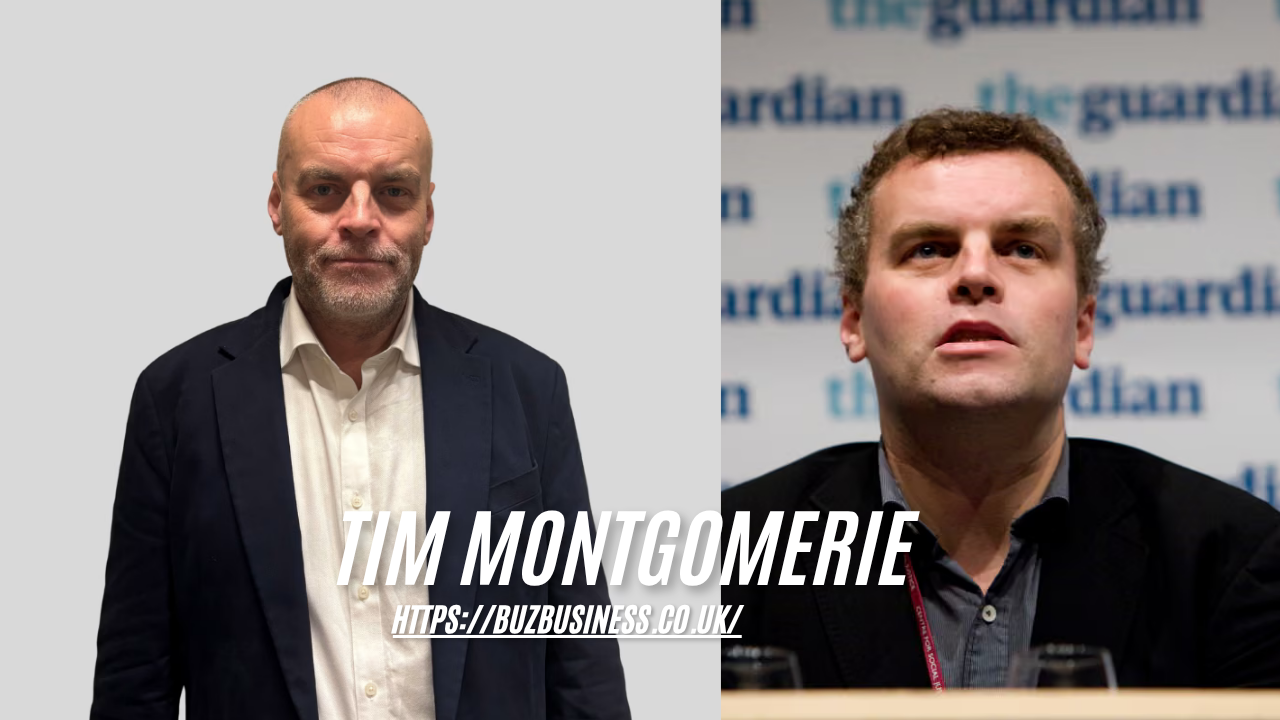
Tim Montgomerie is a British political commentator, activist, and blogger who has played a pivotal role in shaping modern conservative discourse in the United Kingdom. Through his founding of influential digital platforms such as ConservativeHome and his work in political media, Montgomerie has been at the forefront of many important political conversations over the last two decades. His contributions to British politics, particularly in the realm of social justice, grassroots movements, and digital political journalism, have earned him a place as one of the most influential figures in modern conservatism.
Early Life and Education
Born on July 24, 1970, in Barnstaple, Devon, Tim Montgomerie was raised in a family with a strong sense of public service. His early years were shaped by the experiences of moving around the UK and abroad due to his family’s military background. Montgomerie attended King’s School in Gütersloh, Germany, and later studied at the University of Exeter, where he earned degrees in Economics and Geography.
During his time at Exeter, Tim Montgomerie became politically active, co‑founding the Conservative Christian Fellowship and serving as the president of the Conservative Association at the university. These early leadership roles in politics laid the groundwork for his future as a key figure in the Conservative Party.
The Rise of ConservativeHome
In 2005, Tim Montgomerie launched ConservativeHome, a website that quickly became one of the leading political platforms for Conservative Party members, activists, and supporters. The website was created to offer an independent, grassroots voice that would serve as a counterbalance to traditional party communications and media outlets. It provided analysis, opinion pieces, and polling data that catered to the core Conservative base while encouraging lively debate on policy and direction.
The success of ConservativeHome established Tim Montgomerie as one of the most influential voices in the Conservative Party outside of the official party structure. He was credited with helping to modernize the Conservative Party’s approach to media and communications, particularly through the use of digital platforms and social media. The website’s influence grew to the point where it was regarded as an essential part of the Conservative Party ecosystem, often cited by MPs and party leaders. Montgomerie’s leadership at ConservativeHome was instrumental in shaping policy discussions and advocating for grassroots engagement within the party.
Social Justice and Policy Advocacy
One of Tim Montgomerie most significant contributions to British politics was his involvement in the Centre for Social Justice (CSJ). Founded in 2004 alongside Conservative MP Iain Duncan Smith, the CSJ focused on addressing poverty, inequality, and social exclusion in the UK. It advocated for welfare reform, education, and social mobility—issues that were typically associated with the left, but that Montgomerie and Duncan Smith believed could be tackled by a conservative framework.
Through the CSJ, Tim Montgomerie helped bring attention to issues such as the role of family structures in poverty and the need for a more compassionate form of conservatism. The think tank became influential within the Conservative Party, particularly during the leadership of David Cameron, who adopted many of its recommendations. Montgomerie’s focus on social justice allowed him to carve out a distinctive space within the conservative movement, blending traditional conservative values with a recognition of the need to address social inequality.
Political Commentary and Media Presence
In addition to his work with Conservative Home and the CSJ, Montgomerie became a well‑known political commentator. His commentary appeared in several national publications, including The Times, The Guardian, and The Daily Telegraph. He regularly contributed op‑eds, analysis, and opinion pieces on issues ranging from political strategy to social policy.
Montgomerie’s media presence expanded as he appeared on various political programs, discussing current events and offering his perspective on the direction of the Conservative Party. His ability to communicate complex political issues in an accessible manner earned him respect among both policymakers and the public.
In 2013, Montgomerie left his role as editor of ConservativeHome to take up a position as Comment Editor at The Times, where he continued his work in political commentary. His move to The Times marked a new chapter in his career, as he shifted from grassroots media to mainstream journalism, though he continued to support the Conservative Party and its values.
UnHerd and the Evolution of Montgomerie’s Views
In 2017, Tim Montgomerie co‑founded the digital magazine UnHerd with hedge fund manager Paul Marshall. UnHerd aimed to provide long‑form journalism and analysis on politics, culture, and society. It focused on providing a platform for dissenting voices and challenging conventional wisdom in mainstream media.
UnHerd’s founding reflected Montgomerie’s desire to create a space for deeper, more thoughtful political debate—a departure from the fast‑paced, often sensational nature of traditional media. While Montgomerie stepped down from his role as editor of UnHerd in 2018, his legacy at the platform remains significant, as it has continued to provide a home for political thinkers across the spectrum.
Montgomerie’s personal views have evolved over time. Though he started his career with strong Thatcherite conservative beliefs, over the years, he has softened his stance on some social issues, moving towards a more pragmatic form of conservatism. His work with the Centre for Social Justice and advocacy for social welfare reform marked a significant shift from the purely free-market ideals that dominated early Conservative thought.
Tim Montgomerie Political Views & Legacy
Tim Montgomerie views are firmly grounded in the centre-right of British politics. He is a strong advocate for personal responsibility, traditional family values, and free markets, but his work on social justice and welfare reform sets him apart from more traditional hard-right factions within the Conservative Party.
Montgomerie’s legacy lies in his ability to bridge the gap between traditional conservatism and the modern needs of society. His work on poverty, welfare reform, and social justice helped reshape the Conservative Party’s approach to these issues, influencing policy debates and broadening the ideological reach of the party. He continues to be a voice for compassionate conservatism, advocating for a form of conservatism that recognizes the importance of community and individual responsibility.
Personal Life and Family
Tim Montgomerie keeps his personal life relatively private, but it is known that he is married with children. He has largely stayed out of the media spotlight when it comes to his family, preferring to keep his professional life separate from his personal affairs.
His commitment to privacy, much like his commitment to his political beliefs, demonstrates a consistency in his character: dedicated to work, family, and values rather than public recognition. Montgomerie’s personal approach to life mirrors his political stance—focused on steady, behind-the-scenes work rather than self-promotion or media frenzy.
Conclusion
Tim Montgomerie is a towering figure in British politics and media. Through his work with ConservativeHome, the Centre for Social Justice, and UnHerd, he has influenced the direction of conservative discourse in the UK. His dedication to social justice, welfare reform, and grassroots engagement within the Conservative Party set him apart from many traditional conservative figures. Montgomerie’s contributions have helped shape a more modern, pragmatic form of conservatism that balances traditional values with a recognition of the changing needs of society.
Though Montgomerie may not be a household name in the traditional sense, his work continues to impact British political thought and policy. Whether through his blog posts, media commentary, or think tank work, Tim Montgomerie remains an influential voice in the conservative movement, advocating for a conservative vision that addresses both economic growth and social equity.