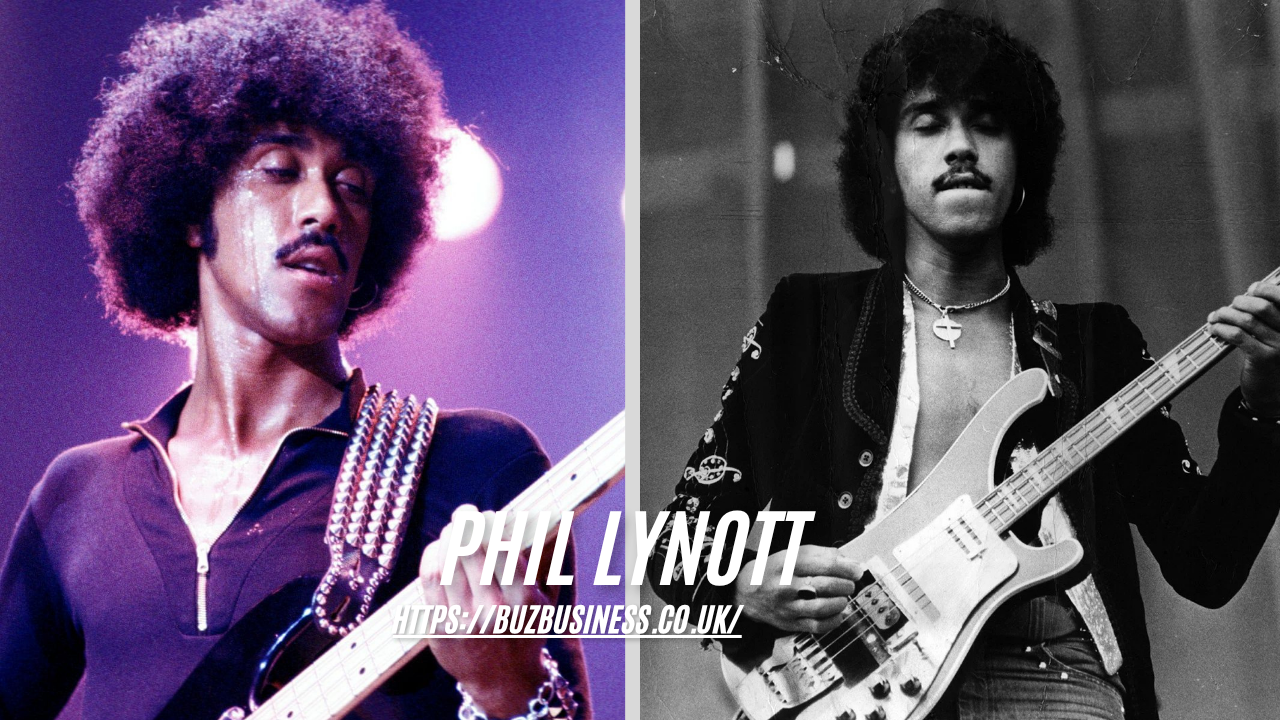
Phil Lynott, the charismatic lead singer, bassist, and primary songwriter of the legendary rock band Thin Lizzy, is remembered as one of the most influential musicians in rock history. Known for his distinctive voice, powerful stage presence, and deeply personal lyrics, Lynott’s career became the stuff of rock legend — a life marked by brilliance, tragedy, and a lasting cultural impact. From his humble beginnings in Dublin to his rise as one of the most celebrated frontmen in rock, his story continues to inspire fans and musicians alike.
Early Life and Background
Born Philip Parris Lynott on August 20, 1949, in West Bromwich, England, Lynott’s early years were shaped by a complex mix of family and culture. His father, Cecil Parris, a Guyanese immigrant, left when he was very young, and he was raised by his mother, Philomena Lynott, in Crumlin, Dublin. Growing up in a working-class area, Lynott faced many of the same challenges that many young people in his neighborhood experienced, from economic hardship to a lack of opportunity.
Lynott’s multicultural heritage—being of mixed Irish and African descent—played a significant role in shaping his identity and, in many ways, his music. He was a pioneer as one of the first Black Irish rock stars, using his mixed ethnicity to craft his unique perspective and voice within the rock world. His early exposure to Irish folk music combined with a growing interest in rock & roll laid the foundation for his eventual career in music.
The Birth of Thin Lizzy
Lynott’s entry into music was shaped by the gritty sounds of the 1960s rock scene, and by 1969, he co-founded Thin Lizzy alongside drummer Brian Downey and guitarist Eric Bell. Initially, the band’s lineup fluctuated, but Lynott’s leadership, combined with his unique vocal style and bass playing, gave the group its distinctive sound.
Thin Lizzy’s music blended hard rock, blues, and traditional Irish folk influences, creating a unique fusion that set them apart from other bands of the era. While their initial success was limited in their home country of Ireland, the band’s sound began to capture attention internationally. Lynott’s songs—often a mix of personal reflections, social commentary, and Irish folklore—resonated deeply with fans and critics alike.
Rise to Stardom and Iconic Albums
The breakthrough for Thin Lizzy came with the release of the album “Jailbreak” in 1976. Featuring the iconic track “The Boys Are Back in Town,” the album launched the band to international stardom. The song became a rock anthem, widely played on radio stations across the globe, and remains Thin Lizzy’s most recognizable hit. This period marked Thin Lizzy as one of the most important and influential rock bands of the 1970s.
Lynott’s songwriting continued to evolve, with albums like “Jailbreak”, “Bad Reputation”, and “Live and Dangerous” cementing Thin Lizzy’s place in rock history. The band’s dual guitar harmonies and Lynott’s emotive vocal delivery, combined with his commanding presence on stage, made them an unforgettable live act.
Phil Lynott’s Songwriting and Musical Legacy
What set Lynott apart from many other rock musicians was his songwriting ability. His lyrics were often deeply personal, exploring themes of love, loss, longing, and Irish heritage. Songs like “Whiskey in the Jar”, a reimagining of an Irish folk ballad, showcased Lynott’s ability to blend traditional Irish music with the raw energy of rock and roll.
Lynott’s distinctive bass playing was also a key element of Thin Lizzy’s sound. His bass lines were melodic yet grounded in rock’s rhythm section. While many rock musicians focused on guitar solos and drum fills, Lynott’s bass lines were integral to the feel of each song, often driving the melody while supporting the harmonics of the guitars.
Personal Struggles and Tragic End
Behind the scenes, Lynott’s personal life was marred by struggles with substance abuse. His addiction to drugs and alcohol became a prominent issue during the 1980s, which affected his health and contributed to the band’s eventual disbandment in 1983.
In 1985, Thin Lizzy played their final concert, with Lynott attempting to balance his commitments to the band and his solo career. However, his battle with addiction took a devastating toll on his health. On January 4, 1986, Phil Lynott passed away at the age of 36. His death was caused by septicemia and pneumonia—a tragic result of his long-standing drug and alcohol abuse. The loss of such a talented and influential figure in rock music was felt deeply by fans and musicians alike.
Phil Lynott’s Legacy and Influence
Despite his relatively short life, Phil Lynott’s legacy continues to endure. Thin Lizzy’s music remains a cornerstone of rock music, with their guitar harmonies, energetic live shows, and timeless anthems continuing to inspire new generations of fans. Songs like “The Boys Are Back in Town”, “Jailbreak”, and “Whiskey in the Jar” are still staples of classic rock radio and have been covered by countless artists.
Lynott is often hailed as one of rock’s great lyricists and bassists, and his influence is widely acknowledged by both fans and musicians. He was one of the first mixed‑race frontmen in a genre traditionally dominated by white artists, making him an iconic figure in rock’s history, not only for his music but also for his role in breaking down cultural and racial barriers.
The Phil Lynott Statue, unveiled in Dublin in 2005, stands as a lasting tribute to his contributions to music and his impact on Irish culture. The statue, located near Grafton Street, is a gathering point for fans who continue to celebrate his life and music.
The Lynott Legacy: Family and Tributes
Lynott’s family, including his daughters Sarah and Cathleen, have continued to honor his legacy in the years following his death. Tributes to him have been held at memorial concerts and in the form of tribute albums. His music is frequently featured in retrospective celebrations of his work and his influence on the rock genre.
Additionally, Phil Lynott’s bass guitar, the iconic Fender Precision Bass, became synonymous with his stage presence, and versions of this bass have been reissued to commemorate his style.
Phil Lynott’s Cultural Impact
Phil Lynott’s cultural impact extends beyond music, as he became an emblem of Irish identity in the global rock scene. Through his mixed heritage and his ability to embrace and express Irish culture through music, Lynott connected deeply with his roots and the audience. His influence on rock, metal, and hard rock bands continues to be acknowledged.
- Gary Moore, a fellow Irish musician and close friend of Lynott, paid tribute to him in the song “Out in the Fields”, which was released shortly after Lynott’s death.
- John Sykes, the guitarist who played alongside Lynott in the latter days of Thin Lizzy, has spoken extensively about Lynott’s musical brilliance and their shared vision for the band.
Phil Lynott’s Last Words and Final Days
Lynott’s final days were marked by his continued struggle with addiction, but he still maintained a sense of determination about his music and legacy. His last words are often quoted as being hopeful, emphasizing his desire to continue making music, despite his health challenges. His passing at such a young age left a void in the rock world, and many musicians and fans reflect on the loss of one of rock’s most brilliant minds.
Conclusion
Phil Lynott’s musical genius and charismatic leadership as the frontman of Thin Lizzy helped define an era of rock music that remains influential to this day. His powerful stage presence, emotive songwriting, and ability to connect with listeners on a personal level made him a beloved figure in rock. Although his life was tragically short, his legacy as one of rock’s great pioneers endures.
Through his timeless music, memorials, and the ongoing influence of his work, Phil Lynott will forever be remembered as a towering figure in the history of rock music. His contributions continue to inspire new generations of musicians, ensuring that his voice, and his story, will never be forgotten.